Nobody Is Coming To Save You — And That's The Best News
There's a version of rescue that most of us were handed early. Someone would recognize our worth and choose us. The right opportunity would find us. The right moment would arrive and we'd feel ready. We just had to wait for the conditions to be right.
Waiting is comfortable in a specific way — it protects you from the discomfort of acting and failing. If you're waiting, you can't be wrong yet. You're just not ready. The spark hasn't arrived. The right person hasn't come. And so the days pass with a low hum of potential that never quite becomes anything.
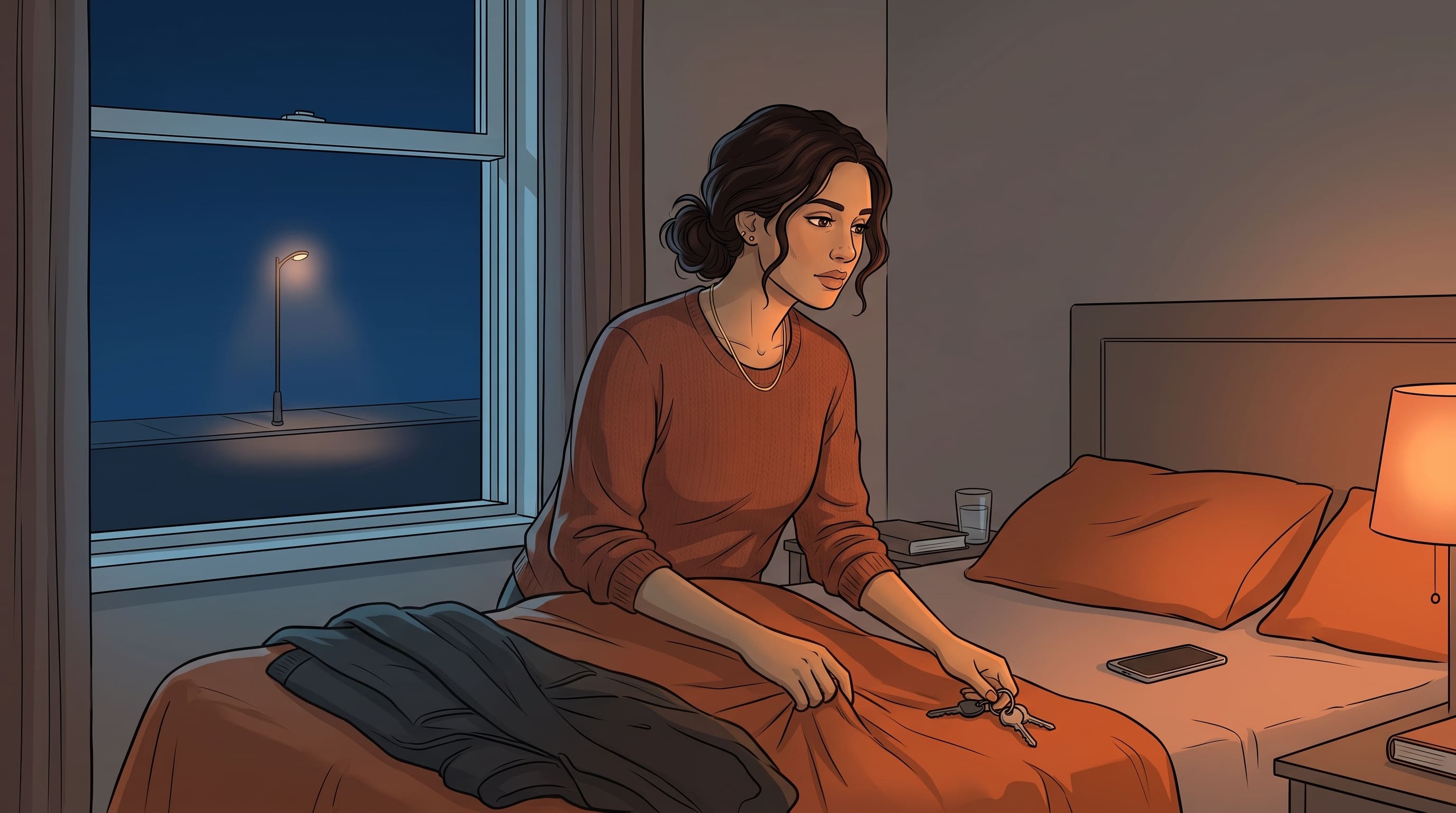
The rescue fantasy is not a character flaw. It's something a lot of women absorb from culture, from the stories we're told, from watching relationships where someone's arrival changes everything. It's not weakness. It's conditioning. But it is a cage, and it's one built from the inside.
The day you accept that nobody is coming is not the day something dies. It's the day something begins. Because the moment you stop waiting to be saved, you start figuring out how to save yourself.
This looks different for different women. For some it's the relationship rescue, the partner who will finally make them feel chosen, secure, whole. For others it's the career rescue — the promotion, the opportunity, the person who recognizes their talent and gives them the platform without being asked. For others it's the internal rescue — the day they finally feel confident enough, ready enough, healed enough to start.
None of these rescuers are coming. Not because you don't deserve them — you might — but because waiting for them is structurally incompatible with building the life you actually want. The women you admire for their groundedness, their careers, their relationships — they didn't get that by being chosen. They got it by deciding.
Deciding is the moment the construction begins. Not the moment you feel ready. Not the moment the conditions are right. The moment you decide that you are the architect of this, and that the blueprints might not exist yet, but you are going to draw them anyway.
Meet Maya
Maya was waiting on two fronts, though she wouldn't have described it that way at the time.
At work, she'd been the person who quietly picked up the projects nobody else wanted, who stayed late without being asked, who assumed that good work would eventually be seen and rewarded without her having to point at it. Two promotion cycles had passed her by. Both times, she told herself the timing wasn't right, or that the person who got it had earned it too, or that asking directly would look like she didn't trust the process. She was, in effect, waiting to be recognized rather than advocating to be considered.
With Daniel, the waiting had a different shape but the same architecture. They'd been seeing each other for two years — not officially, never quite defined, full of good weekends and long gaps and a running, unspoken agreement not to ask where this was going. Maya told herself she was being patient. Low-maintenance. Easygoing. Secretly, she was waiting for a moment when Daniel would decide, on his own, that she was worth choosing properly. She had built an entire relationship to Daniel's inconsistency around the hope that consistency was coming.
Both patterns had the same engine: hoping to be chosen rather than choosing for herself. Working hard and staying quiet rather than asking directly. Waiting for someone else to make the decision that was actually hers to make.
The Question That Started the Shift
The shift for Maya didn't come from a dramatic moment. It came from a single question her therapist asked, almost in passing, during a session about the promotion she hadn't applied for.
The therapist asked: 'What if ready is not a feeling that arrives? What if it's a decision you make in the absence of it?'
In plainer terms, what she meant was this: stop waiting for confidence to show up before you act. Confidence is not a precondition for starting — it's usually the result of having started. You do not need to feel ready to apply for the role, have the conversation with Daniel, or send the message. You need to decide, and let the feeling of readiness catch up afterward, if it ever fully does.
Maya sat with that question for three days before it changed anything. The uncomfortable part wasn't the idea — the idea made sense immediately. The uncomfortable part was realizing how long she'd been waiting for a feeling that was never going to arrive on its own.
Maya had a list; and the list had a reassuring logic. Preparation. Patience. Not rushing. But three years had passed and the list hadn't gotten shorter. It had gotten longer, because waiting generates new reasons to keep waiting.
The week after the therapy session, Maya did two things she hadn't let herself do before. She applied for a director-level role at a different company — not because she felt ready, but because she'd decided that readiness wasn't going to be the deciding factor anymore. And she sent Daniel a message that said, plainly, that she needed to know where things stood, and that she needed to know soon.
Neither outcome was resolved yet. That wasn't the point. The point was that for the first time in longer than she could remember, Maya had acted before the feeling arrived instead of waiting for it.
Maya acted before the feeling of being ready arrived. But acting doesn't mean the old patterns disappear — it means you start colliding with them in real time. The next thought is why she'd waited two years to ask Daniel a question that took one sentence to send. Chapter 2 is about the story underneath that kind of waiting.