Signs You're Growing — And Why It Doesn't Feel Like It
Here is something nobody tells you about growth: it often presents as loss. The person you outgrow might be someone you love. The dynamic you leave might be one that was comfortable, even if it was small. The new version of you might make some of the people in your life uncomfortable, because she has different requirements than the old version did.
Growth that only looks like gain is probably not growth. It's addition without subtraction — new things layered on top of old patterns without the old patterns actually changing. Real growth involves shedding. And shedding feels like grief.
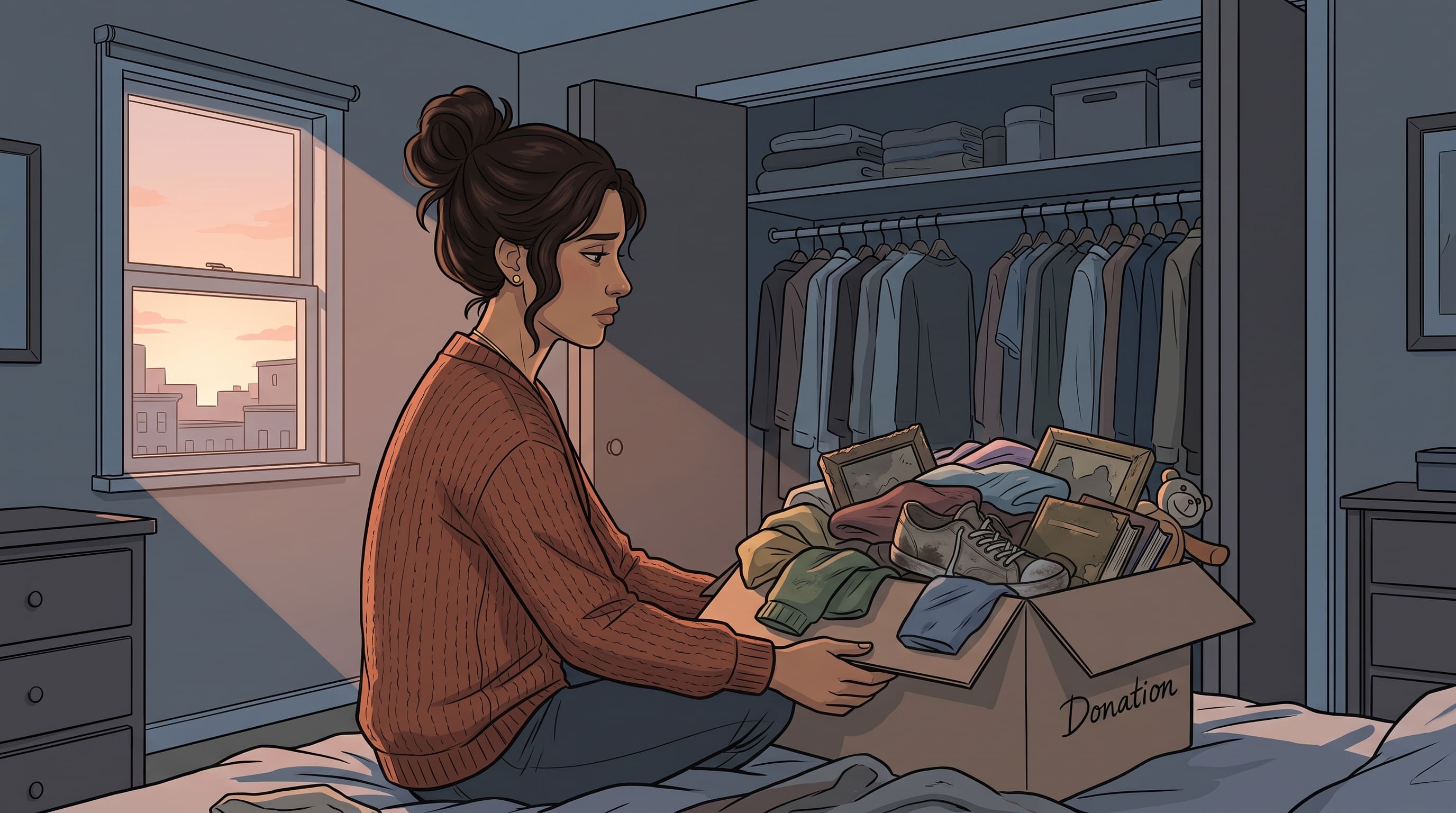
This is worth naming clearly: you can be doing everything right and it can still feel terrible for a while.
Growth is not always the feeling of expanding. Sometimes it's the feeling of a room getting smaller as you get bigger. Sometimes it looks like people leaving. Sometimes it looks like loneliness before community. That's not failure. That's the sequence.
What Happened With Daniel
The two-week deadline arrived. Daniel didn't have an answer — or rather, his answer was a version of the same uncertainty that had defined the previous two years, just phrased more gently. He cared about her, he said. He just didn't know if he was ready for something more defined. He asked for more time.
The old Maya would have given it to him. The new one, holding the standard she'd built in Chapter 3, said no — not with anger, but with clarity. If two years and a direct deadline weren't enough to produce an answer, more time wasn't going to change that. She ended it.
It did not feel like a win. It felt, for the first several weeks, like a loss — because in the way that mattered emotionally, it was one. She missed him. She questioned whether she'd been too rigid, too fast, too much for asking for something as simple as clarity. The old story — I am too much — resurfaced almost immediately, right on schedule, trying to explain the ending as her fault.
Around the same time, a long friendship with a woman named Priya, which had quietly become one-sided over the past year — Maya always the one reaching out, remembering birthdays, showing up — began to fade once Maya stopped initiating every single time. Priya didn't reach back. The friendship didn't end dramatically. It just thinned, the way things do when only one person has been holding them together.
Both endings happened because Maya had raised her standard. Both felt, in the moment, like evidence that raising the standard had cost her the very things she wanted.
What she couldn't see at the time: the relationship with Daniel had been requiring her to accept ambiguity indefinitely. The friendship with Priya had been running on her labour alone for over a year. The quiet Saturday nights were, for the first time in a long while, actually chosen — not filled by default with whoever happened to be available.
'I kept waiting to feel better in the old way — which was having someone around, being busy, not sitting with myself. When I stopped chasing that feeling and just stayed with where I actually was, something shifted. I started to recognise myself in the quiet. It took a while. But that's what it was.'
The Signs Worth Learning to Recognise
- You get uncomfortable in rooms you used to be fine in. This is not regression. You've outgrown the fit, and the discomfort is the information.
- You stop explaining yourself to people who didn't ask. The energy you used to spend justifying your choices is now available for making them.
- You feel less urgency to be liked by everyone. The approval you used to need from all directions narrows to the handful of people whose opinion is genuinely meaningful.
- Old coping mechanisms feel less satisfying. The scroll, the drink, the unavailable person — they still pull, but they don't hit the same way. Something in you knows they're not what you actually need.
- You can sit with discomfort longer before reacting to it. This is a profound change. The gap between the trigger and the response is where your freedom lives.
- You feel more alone and more yourself simultaneously. The loneliness of the transition is real. So is the sense of coming home to yourself that accompanies it.
Reflection · For your journal. No right answer — just write what's true.
1. What in your life are you currently grieving that might actually be growth in disguise?
2. What has left your life in the past year — a relationship, a friendship, a version of yourself — that you've been treating purely as loss but might also be shedding?
3. What does 'coming home to yourself' feel like for you specifically? When was the last time, even briefly, you felt it?
You're learning to recognise growth in real time, even when it hurts. The next question is how to think about time itself — because Maya, like most women doing this work, was doing it inside a culture that kept insisting she should already be further along. Chapter 5 is about playing a longer game than that.
Buy This Guide
Lifetime access to this guide.
Unlimited All-Access
Unlock all current & future guides.