When Things Fall Apart — Getting Back Up Without Going Back
There will be setbacks. Not might be — will be. The relationship you thought was different turns out not to be. The job you were brave enough to leave turns out to be harder to replace than you expected. The version of yourself you were building starts to feel out of reach, even after real progress.
What happens in the setback is often not the thing that determines where you end up. What determines where you end up is what you do in the hours and days after — specifically, whether the setback sends you back to old patterns or forward to new ones.
The pull back to old patterns is real and powerful. When things fall apart, the nervous system looks for what's familiar, because familiar is predictable, and predictable feels safe even when it isn't good. This is why women who have done significant growth work can find themselves, after a painful experience, back in a dynamic they thought they'd left behind.
A setback is not evidence that you haven't grown. It's evidence that growth is not linear, and that your nervous system is still human. The question is not whether you fell. It's whether you go back to where you fell from, or forward from where you landed.
The First 48 Hours
The first 48 hours after a significant setback are not the time for conclusions. They're not the time to decide what this means about you, about the future, or about whether any of the work you've done has mattered. The emotional response to loss and disappointment is neurologically similar to physical pain — it literally impairs judgment. Decisions made in this state are often ones you revise later.
What the first 48 hours are for: feeling what you feel without making it permanent. Crying if you need to. Talking to someone safe if you need to. Not being alone if that's what you need. Sleeping. Eating. The basics.
What they're not for: sending the message, making the decision, drawing the conclusion, going back to the person or situation that was the source of the pain.
After 48 Hours: Diagnostic, Not Verdict
Once the acute pain has passed, the useful question is: what specifically happened? Not 'what does this mean about me' — what specifically happened? What was in my control, and what wasn't? What did I do that I'd do differently? What happened that was simply outside my power?
The difference between a verdict and a diagnostic is the difference between 'I always end up here' and 'this specific thing happened for these specific reasons.' Verdicts close possibilities. Diagnostics open them.
The women who recover from setbacks well are not the ones who don't feel the impact. They feel it fully. What they're better at is not allowing the feeling to write a permanent conclusion. They process, and then they ask what the experience can actually teach them.
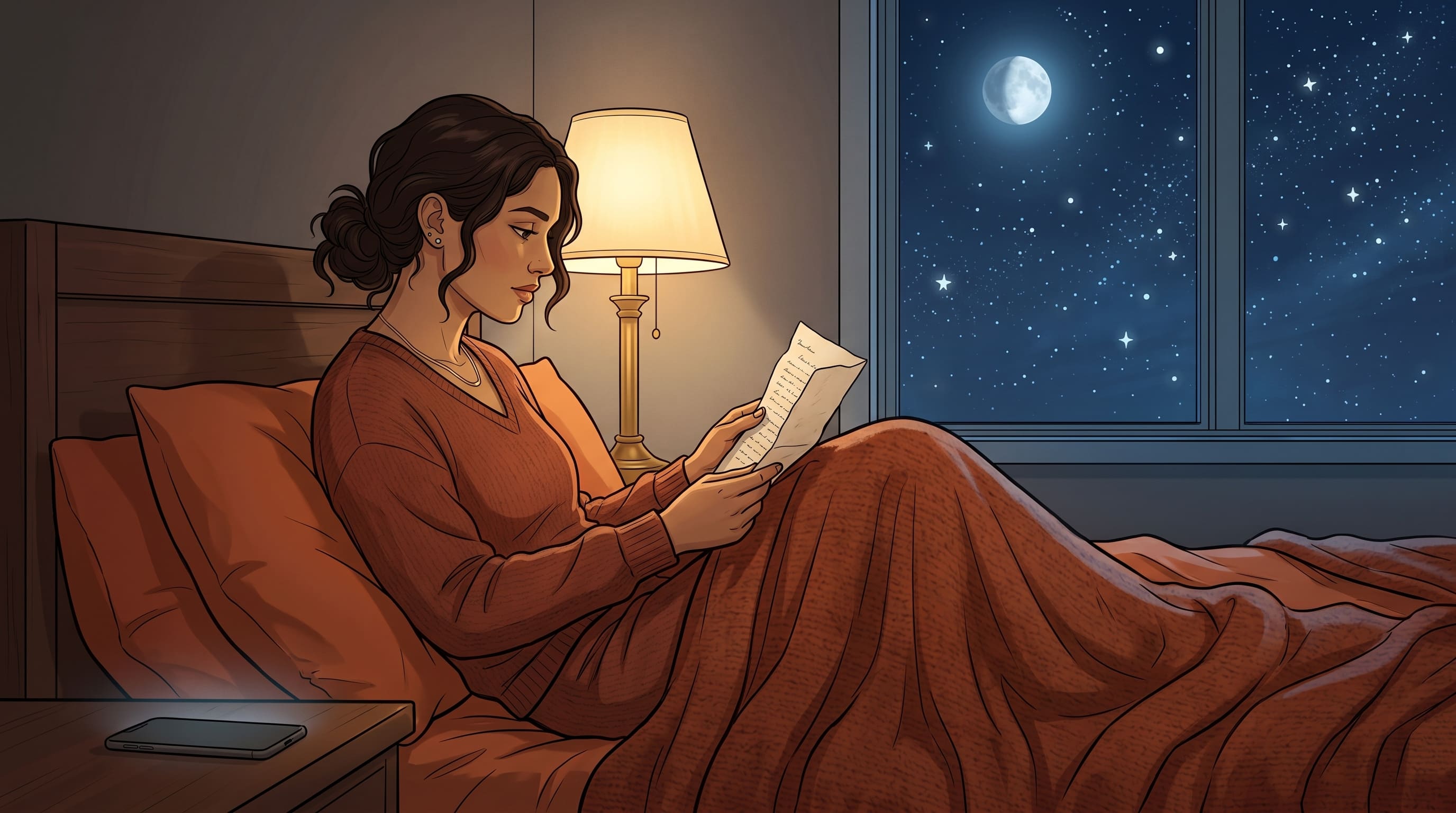
What Almost Happened With Maya
Six months into her new job, on a night that had nothing obviously wrong with it — just a quiet Saturday, alone, feeling the specific loneliness that sometimes still showed up — Daniel messaged her again. Nothing dramatic. Just a 'thinking of you' at exactly the moment she felt least resourced to receive it.
She almost answered. Not because Daniel had changed, or because anything about the actual situation was different — but because the message arrived at a vulnerable hour, and the pull toward what was familiar was, in that moment, very strong. Going back would have been easy. It would have felt, briefly, like relief.
What stopped her wasn't willpower exactly. It was the letter she'd written from her future self. She read it again that night. And the line that stopped her was simple: the version of her she was building was not going to be possible if she answered that message the way the old version would have.
She didn't respond. She went to bed. She woke up the next morning, went for a walk instead of reaching for her phone, and cast one small vote. Then, later that day, another one. The pull toward Daniel didn't disappear completely — it faded, the way these things do, a little more each time she didn't act on it.
The setback happened. The temptation was real. She didn't go back. All three of those things were true at once, and none of them cancelled the others out.
'That's the whole thing, I think,' she said. 'Growth doesn't mean the old pull disappears. It means you have a place to land other than where you started.'
Reflection · For your journal. No right answer — just write what's true.
1. What is your most common response to setback — what do you usually reach for in the first 48 hours? Is it actually helpful? Be honest.
2. What's the 'old pattern' that has the strongest pull for you when things go wrong? Name it specifically, not vaguely.
3. What would 'going forward instead of back' look like after your most recent setback? What's one next vote you could cast?
Buy This Guide
Lifetime access to this guide.
Unlimited All-Access
Unlock all current & future guides.